Foothill open space, older central homes and fast-growing east-side subdivisions each bring their own pests. Licensed, locally owned pest control from Pueblo, on scheduled Colorado Springs route days.
Reviewed by A & M's licensed applicator team Updated 9 min read Written for Pueblo County, CO
Pest control in Colorado Springs, CO: the short answer
Quick answer
Pest control in Colorado Springs, CO typically costs $100–$150 for a one-time general visit, or about $40–$60 a month on a quarterly plan. We're based in Pueblo, so Springs appointments run on scheduled route days, usually within a few days of your call. Common local pests include mice, miller moths, boxelder bugs, ants, wasps, black widows and bed bugs.
General visit
$100–$150
Quarterly plan
~$40–$60/mo
Scheduling
Route days
From our office
~45 mi north on I-25
Phone line
Open 24/7
Colorado Springs is the county seat of El Paso County and the largest city on our service map, spread across roughly 6,000 feet of elevation where the plains meet the Front Range. To the west, Cheyenne Mountain and the red rock fins of Garden of the Gods frame foothill neighborhoods tucked into scrub oak and pine. Through the middle of town, Monument Creek runs south to join Fountain Creek near downtown. To the east, newer subdivisions keep spreading across former grassland.
That range means there is no single “Colorado Springs pest problem.” An older central home, a foothill lot and a new east-side house each attract different pests, so we plan each visit around your neighborhood.
We want to be straightforward: A & M Pest & Termite Control is a Pueblo company. We serve Colorado Springs on scheduled route days rather than keeping a technician parked in town. The south and southeast parts of the city are closest to our route and the easiest to fit in; we also reach central and west-side homes, and we'll tell you honestly when your next available window is before you book.
What are the most common pests in Colorado Springs?
These are the pests Springs homeowners and renters ask us about most, with the local reason each one turns up:
House mice move into garages and kitchens across the city each fall. On the west side, deer mice from scrub oak and open space get into cabins, sheds and crawlspaces, and they are the hantavirus carrier in Colorado.
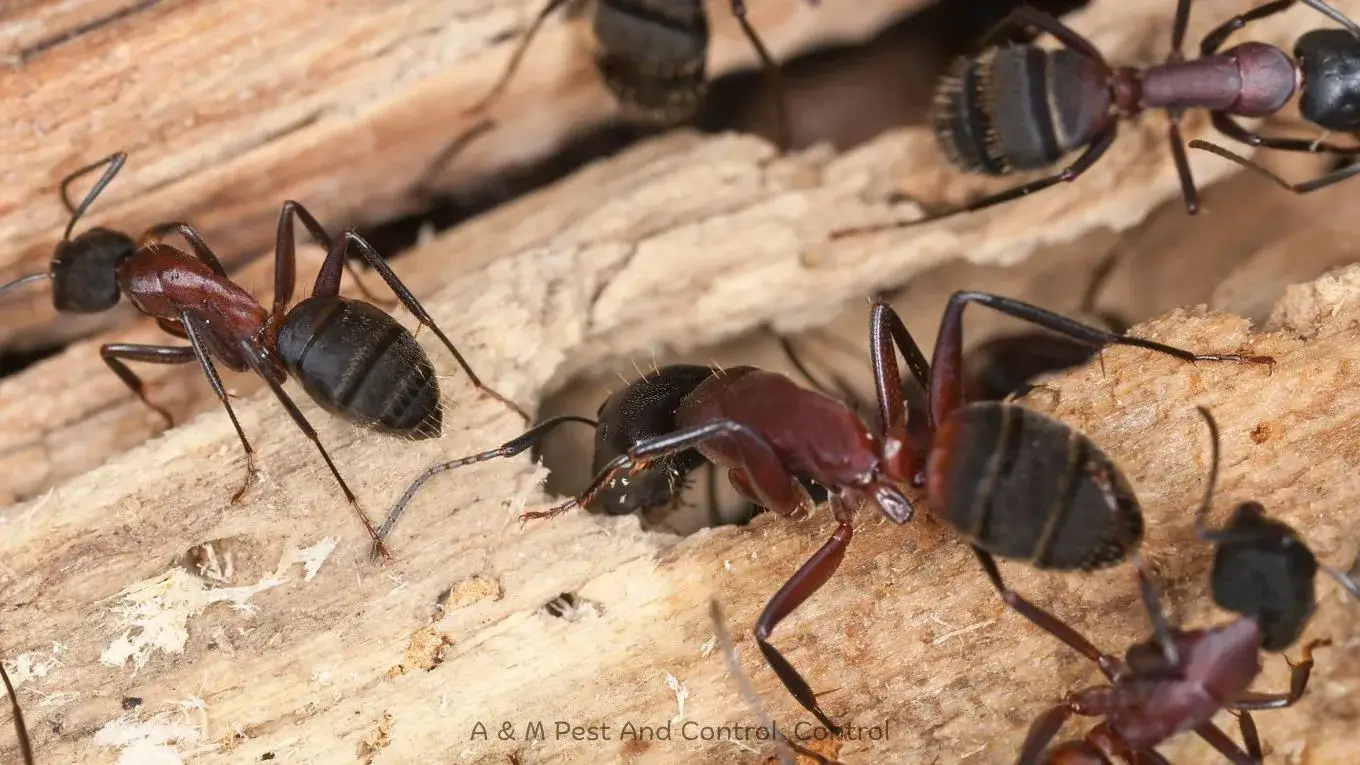
Carpenter ants nest in moist or decaying wood in foothill neighborhoods near pine and oak. Pavement and odorous house ants trail into kitchens citywide after spring snowmelt and rain.
Paper wasps build under decks and eaves by June. Western yellowjackets nest in the ground and in wall voids and get aggressive around patios and trash cans in August and September.
Window wells, rock landscaping, woodpiles and garage corners give western black widows the dry, undisturbed spots they need. They're common in both older and newer neighborhoods.
A large tourism trade, a big rental market and steady military relocation keep luggage, furniture and people moving through the city, and bed bugs travel with them.
Apartment complexes and older multifamily buildings with shared plumbing let German cockroaches spread from unit to unit. They need baiting and follow-up, not a single spray.
Cockroach control
Ticks on west-side trails
Ticks are a real concern if you hike or walk dogs on foothill trails. The Rocky Mountain wood tick is most active from March through early July and can carry Colorado tick fever. Check yourself, kids and pets after time on the trail, and see our flea and tick service if pets are bringing them home.
Why do Colorado Springs homes get pests?
Where you live in the Springs matters more than almost anything else when it comes to pest pressure. These are the local conditions we look at during an inspection:
Foothill edges
West-side homes near Cheyenne Mountain, Garden of the Gods and similar open space share a fence line with deer mice, carpenter ants in old stumps, and ticks in tall grass and brush.
Older central housing
Historic homes in the older central and west-side neighborhoods have stone or brick foundations, settled sills and many plumbing penetrations. Mice, boxelder bugs and spiders use every one of those gaps.
New east-side construction
Grading on former prairie displaces mice, field ants and ground-nesting yellowjackets, and they move into the nearest finished garages and window wells.
Creek corridors
Monument Creek and Fountain Creek hold cottonwoods, willows and damp soil through the middle of the city, which keeps mosquitoes, spiders and rodents close to nearby homes.
High-altitude climate
Cold nights at about 6,000 feet push mice and overwintering insects indoors earlier in fall than in Pueblo, and a short warm season concentrates wasp activity into a few busy weeks.
A population on the move
Hotels, short-term rentals, apartments and military moves all bring a steady flow of luggage and used furniture into the city, the main way bed bugs and German roaches arrive.
What should you do about miller moths in Colorado Springs?
Each spring, usually from mid-May into June, “millers” turn up in garages, behind shutters, inside cars and around porch lights all over Colorado Springs. They are adult army cutworm moths migrating from the plains toward the mountains, where they spend the summer feeding on wildflower nectar. The Springs sits right in their path.
Millers don't bite, sting, breed indoors or eat clothing. They are a nuisance, and the flight passes in a few weeks. Spraying the yard does very little, because new moths keep arriving every night. What helps:
Keep garage doors closed at dusk and turn off unneeded outdoor lights
Switch porch fixtures to yellow bulbs, which attract fewer moths
Check weatherstripping on doors and screens before May
Vacuum moths that get inside instead of swatting them on walls
Set a pan of soapy water under a night light in the garage to catch strays
In fall, the same sunny walls collect boxelder bugs: harmless black-and-red insects looking for a warm crack to spend the winter. Sealing gaps around siding, windows and vents before September keeps most out; an exterior treatment handles the rest.
Deer mice, hantavirus and foothill homes
Deer mice are common around scrub oak, rock outcrops and open space on the west side of Colorado Springs. They readily move into sheds, garages, crawlspaces and seasonal cabins, and they are the main carrier of hantavirus in Colorado. The virus spreads when dried droppings and nesting material are stirred into the air.
Open doors and windows to air out a closed space for at least 30 minutes before cleaning
Wear rubber gloves and spray droppings and nests with a disinfectant or a bleach solution until soaked
Wipe up wet material with paper towels; never sweep or vacuum dry droppings
Bag waste, disinfect the area again and wash gloved hands before removing gloves
Call us for exclusion if you keep finding fresh droppings after clean-up
Our rodent control service focuses on sealing the gaps rodents use, especially garage door corners, dryer and utility penetrations and foundation vents, then trapping or baiting in tamper-resistant stations where kids and pets can't reach.
Colorado Springs pest calendar
Seasons in the Springs run a little later and colder than in Pueblo. This is how activity typically lines up through the year:
Seasonal pest guide for Colorado Springs, CO
Season
What we see in Colorado Springs
What we focus on
Spring (Mar–May)
Ant trails after snowmelt, first wasp queens, tick season on foothill trails, millers arriving in May
Perimeter treatment, ant baiting, sealing doors and screens
Early summer (Jun)
Miller flight winding down, paper wasp nests under decks, carpenter ants swarming near the foothills
Nest removal, carpenter ant inspection, wood-moisture checks
Summer (Jul–Aug)
Yellowjackets building, mosquitoes near the creeks, black widows in window wells, moving-season bed bugs
Ground-nest treatment, web clean-out, bed bug inspections
Fall (Sep–Oct)
Boxelder bugs on sunny walls, mice heading indoors with the first cold nights, yellowjackets at their worst
Exclusion, exterior treatment, bait stations
Winter (Nov–Feb)
Mice in garages and attics; bed bugs and German roaches indoors year-round
Trapping, interior follow-ups, multifamily service
For most Springs homes, a fall visit before the first hard freeze does the most good, because it closes the gaps mice and overwintering insects use before they move in.
Pest control services available in Colorado Springs
Our full service line is available on Colorado Springs route days at the same pricing and with the same written warranty our Pueblo customers get. Subterranean termites are present along the Front Range, so a termite inspection is worth scheduling before you buy an older home.
Quarterly Integrated Pest Management plans that stop infestations before they start.
Learn more
Homes, rentals and businesses in Colorado Springs
Single-family homes
A residential visit covers the kitchen, bathrooms, basement or crawlspace and garage, then the foundation, window wells, eaves and a band of yard around the house. On foothill lots we also check decks, woodpiles and sheds for carpenter ants, rodents and widows.
Apartments, rentals and short-term stays
Bed bugs and German cockroaches in multifamily buildings are best handled unit by unit with neighboring units inspected too. We coordinate with property managers and leave written service records, which helps between tenants and guests.
Quarterly prevention
Our quarterly IPM plan lines up with the Springs calendar: ants and millers in spring, wasps in summer, boxelder bugs and mice in fall, with our re-treatment warranty in between.
Keep firewood off the deck and away from siding
Trim scrub oak and shrubs back from the roofline
Fit window well covers to keep out spiders and debris
Repair torn screens before miller season
How Colorado Springs service works
Four steps, planned around scheduled trips up I-25 from Pueblo.
Call and get a route date
Tell us what you're seeing and where you live in the city. We give you the next route-day window up front.
Free inspection
Inside and out, including garage, crawlspace, window wells and the yard edge, with findings explained.
Targeted treatment
Baits, exclusion and labeled products matched to the pest, placed with kids and pets in mind.
Follow-up & warranty
Scheduled follow-ups for bed bugs and roaches, and free re-treatment if covered pests return.
Licensed, insured and accountable
Every technician we send to Colorado Springs works under Colorado Department of Agriculture applicator licensing, and every product we use is EPA-registered and applied according to its label. Here's what backs that up:
CDA Licensed Commercial Applicator
Licensed through the Colorado Department of Agriculture's pesticide applicator program.
EPA PESP Partner
Partner in the EPA's Pesticide Environmental Stewardship Program for reduced-risk pest management.
GreenPro® Certified
Follows GreenPro Integrated Pest Management standards: inspect first, treat only what's needed.
Our Colorado Springs service area
We serve Colorado Springs homes and businesses on scheduled route days, with the south and southeast parts of the city closest to our I-25 route from Pueblo. Central and west-side neighborhoods are served too; for the north end we'll confirm availability when you call.
How much does pest control cost in Colorado Springs?
A one-time general pest control visit in Colorado Springs typically costs $100–$150, and quarterly plans run about $40–$60 per month. Bed bugs, cockroach infestations and termite work are quoted after a free inspection. New customers get 10% off their first service.
Are you a Colorado Springs company?
No. We're a locally owned company based in Pueblo, about 45 miles south on I-25. We serve Colorado Springs on scheduled route days, so we can't promise same-day service there, but we'll give you a firm appointment window when you book.
Which parts of Colorado Springs do you cover?
South and southeast Colorado Springs are closest to our route and easiest to schedule. We also serve central and west-side neighborhoods, including foothill homes. For the north end of the city, call and we'll confirm the next available date.
Do you charge more because Colorado Springs is outside Pueblo County?
No. Our pricing is the same in every town we serve. Grouping Springs appointments on route days is how we keep travel costs out of your price.
What can I do about miller moths?
Millers are migrating army cutworm moths and pass through in late spring. Keep garage doors closed at dusk, reduce outdoor lighting, repair screens and vacuum moths that get inside. Spraying the yard has little effect because new moths arrive every night.
Are ticks a problem on the west side of Colorado Springs?
On foothill trails and brushy open space, yes. The Rocky Mountain wood tick is active mainly in spring and early summer. Do tick checks after hikes and keep pets on a veterinarian-recommended preventive.
How do I clean up mouse droppings safely?
Air out the space, wear gloves, soak droppings and nests with disinfectant, and wipe them up wet. Never sweep or vacuum dry droppings, since deer mice in Colorado can carry hantavirus. Follow the CDC's clean-up guidance for heavy contamination.
Can you treat apartments and short-term rentals?
Yes. We work with owners and property managers on bed bugs, German cockroaches and general pests, and we provide written service records. Tenants should check their lease and coordinate with the landlord before booking.