Irrigated fields, barns and the Arkansas River bring mosquitoes, rodents, flies and black widows close to home. Licensed, locally owned pest control for Avondale houses, mobile homes and farm properties.
Reviewed by A & M's licensed applicator team Updated 9 min read Written for Pueblo County, CO
Pest control in Avondale, CO: what to expect
Quick answer
Pest control in Avondale, CO typically costs $100–$150 for a one-time general visit, or about $40–$60 a month on a quarterly plan. Most homes take 45–75 minutes because we also check barns, sheds and feed storage. The main Avondale pests are mosquitoes from irrigation water, mice and rats around feed, ants, flies and black widows in outbuildings.
General visit
$100–$150
Quarterly plan
~$40–$60/mo
Visit length
45–75 min
From our office
~12 mi east on US-50
Phone line
Open 24/7
Avondale is an unincorporated farming community in eastern Pueblo County, roughly 12 miles east of Pueblo where US-50 follows the Arkansas River downstream. Homes here tend to sit on working land: irrigated fields, pasture, vegetable ground, horse pens and the irrigation ditches that carry river water across the valley floor. A lot of households live in manufactured or mobile homes, and nearly every property has at least one barn, equipment shed or feed room.
That setting changes the pest picture. In town, most problems start in the yard and stop at the foundation. In Avondale, the house is usually the last stop: mice build up in the hay barn first, flies breed in the corrals, mosquitoes hatch in flooded furrows and tailwater, and black widows settle into the equipment shed long before anyone sees one on the porch. Good pest control out here treats the whole property, not just the living room.
A & M Pest & Termite Control is based at 50 Radcliff Ln in Pueblo, so Avondale is one of the closer rural communities we cover. We run eastern Pueblo County calls on a route, which keeps the trip cost out of your price and lets us give you a real appointment window.
What are the most common pests in Avondale?
These are the pests we see most often on Avondale homes and farms, and the local reason each one shows up:
Flood-irrigated fields, ditch seepage, stock tanks and river backwaters all breed mosquitoes. Culex tarsalis, the main West Nile virus vector in Colorado, thrives in exactly this kind of farm water from June into September.
Grain, pellets, hay and pet food draw house mice, deer mice and, on some farms, Norway rats. Harvest and the first frost push them from fields into barns, then into homes.
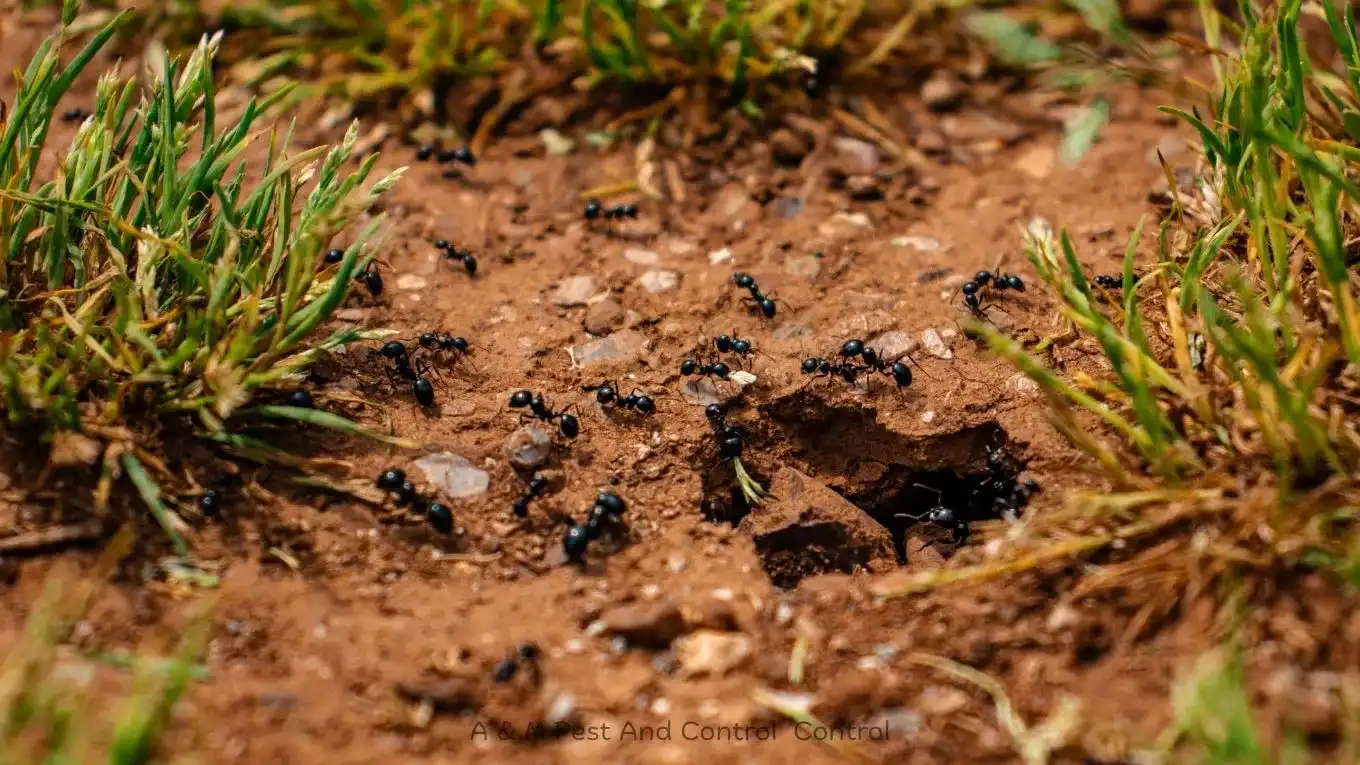
Field ants build mounds in the sandy river-bottom soil along driveways and pasture edges. Pavement ants trail into kitchens along slab and skirting edges from spring through fall.
Stacked lumber, pipe, irrigation tarps, old tires and unused equipment are prime western black widow habitat. Wear gloves when you reach into anything that has sat undisturbed.
Ranch dogs, barn cats, raccoons, skunks and rabbits move fleas between the barn, the yard and the house, especially where animals sleep under porches or in crawlspaces.
Larger outdoor roaches come in through gaps around plumbing and skirting, while German cockroaches arrive in boxes and appliances and breed in kitchens. Each species needs a different treatment.
Cockroach control
About flies
House flies and stable flies are a normal part of life near livestock, but numbers jump when manure, wet bedding or spilled feed sit for more than a few days. Fly breeding sites can't be sprayed away: weekly clean-out of pens and feed spills does more than any product, and we add targeted treatment around doors and resting surfaces once sanitation is in place.
How do you keep mice and rats out of barns and feed storage?
Feed is the reason rodents stay on a farm. A single torn bag of pellets or a hay barn with loose grain on the floor can support a population that spills into the house every fall. We start rodent work in Avondale at the feed, not the kitchen.
What we do on rural properties
Walk every outbuilding for droppings, gnaw marks, burrows and runways along walls
Place traps and tamper-resistant bait stations where livestock, dogs and children can't reach the bait
Seal gaps around the home's skirting, plumbing chases and garage doors with metal and hardware cloth
Map burrows along ditch banks and foundations so we can track activity between visits
Give you a written plan for feed storage, spill clean-up and bait-station checks
Simple changes that cut rodent pressure
Store grain, pellets, chicken feed and dog food in metal cans with tight lids
Sweep feed rooms and under feeders weekly so spilled grain doesn't pile up
Stack hay on pallets with a gap from the wall so you can inspect behind it
Keep junk piles, old vehicles and scrap lumber well away from the house
Close gaps under barn and shop doors with sweeps or rubber seals
Repair mobile-home skirting so mice can't nest under the floor
Deer mice, which live in fields and pasture edges around Avondale, are the hantavirus carrier in Colorado. When you clean out a shed or barn with heavy droppings, ventilate first, wet the droppings with disinfectant and never sweep or vacuum them dry. Our rodent control service covers clean-up guidance and exclusion as well as removal.
Why are mosquitoes so bad near Avondale's irrigation ditches?
Mosquitoes need standing water for about a week to go from egg to biting adult in hot weather. Moving water in a ditch is not much of a problem; the trouble spots are where water stops moving. On Avondale properties we most often find larvae in:
Low corners of flood-irrigated fields and tailwater that pools after an irrigation set
Seepage puddles along ditch banks and under leaking headgates
Stock tanks, water troughs and buckets that aren't dumped or stocked with fish
Old tires, tarps, wheelbarrows and equipment that catch rain
Cattail and willow areas near river backwaters and ponds
Our approach is to find and reduce those sites first, treat standing water on your property with larvicides where it's appropriate, and apply a barrier treatment to shrubs and shaded resting areas around the house, patio and animal pens. Irrigation ditches themselves are run by the ditch company that owns them, so we treat what's on your land and point out anything in a shared ditch you may want to report.
Protect people and horses
Culex tarsalis bites mostly at dusk and dawn, and it is the species that carries West Nile virus to people and horses in Colorado. Use repellent at evening chores, keep screens in good repair, and talk with your veterinarian about West Nile vaccination for horses.
Avondale pest calendar: when each pest peaks
Avondale sits a bit lower than Pueblo, around 4,500 feet, and farm schedules drive a lot of the activity. This is the calendar we plan rural service around:
Seasonal pest guide for Avondale, CO
Season
What we see in Avondale
What we focus on
Spring (Mar–May)
Ant mounds along driveways, mice still in barns, first wasp queens, fly numbers building around pens
Perimeter treatment, outbuilding inspection, ant baiting
Early summer (Jun)
Irrigation season in full swing, first mosquito hatches, black widows in sheds
Breeding-site survey, larvicide where appropriate, web clean-out
Mid–late summer (Jul–Aug)
Peak mosquitoes and West Nile risk, flies at their worst, fleas on pets and wildlife
Barrier treatments, fly control around doors, flea treatment
Fall (Sep–Nov)
Harvest and first frost push mice and rats into barns and homes; spiders seek shelter
Rodent exclusion, bait stations, sealing skirting and doors
Winter (Dec–Feb)
Rodents in feed rooms, attics and under mobile homes; indoor cockroaches
Trapping, station checks, interior follow-ups
If you only book one visit a year, make it early fall. Getting exclusion work done before harvest and the first hard frost prevents most of the winter rodent calls we get from eastern Pueblo County.
Pest control services available in Avondale
Every service we offer in Pueblo is available in Avondale, with the same licensed technicians, pricing structure and written warranty. Older farmhouses with wood sills close to the soil are worth a termite inspection, since subterranean termites are active in the Arkansas Valley.
Quarterly Integrated Pest Management plans that stop infestations before they start.
Learn more
Residential, farm and preventive pest control in Avondale
Houses and mobile homes
A residential visit covers the kitchen, bathrooms, utility room and garage, then the foundation or skirting, entry points and a band of yard around the house. For manufactured homes we pay extra attention to the crawlspace under the floor, where plumbing penetrations and damaged skirting give mice, roaches and spiders easy access.
Barns, shops and farm businesses
Equipment shops, feed storage, produce stands and small farm operations get scheduled rodent and insect service with a written record of each visit. Tell us what's stored where, and we'll keep products and bait away from feed, harvested crops and animals.
Quarterly prevention for rural properties
Our quarterly IPM plan suits most Avondale homes because the fields, ditches and river corridor keep producing new pests every season. Each visit renews the exterior treatment, services rodent stations around the home and outbuildings, and checks for wasp nests, widow activity and new burrows.
Keep a gravel or bare strip 18 inches wide along the foundation
Dump or refresh standing water at least once a week in summer
Turn porch lights to yellow bulbs to attract fewer night insects
Wear gloves when moving stored pipe, tarps or lumber
How our Avondale service works
Four steps, designed around working land instead of a city lot.
Call or book
Tell us what you're seeing and which buildings are involved. We confirm a time window on our eastern county route.
Whole-property inspection
House, crawlspace or skirting, garage, barns, feed rooms and water sources, with findings explained on site.
Targeted treatment
Baits, exclusion and labeled treatments placed away from feed, crops, pets and livestock.
Follow-up & warranty
Station checks and seasonal visits, plus free re-treatment if covered pests return during the warranty period.
Licensed and insured pest control for Pueblo County farms
When products go down near animals, wells and crops, credentials matter. Our applicators are licensed through the Colorado Department of Agriculture, and every product we use is EPA-registered and applied strictly according to its label.
CDA Licensed Commercial Applicator
Licensed through the Colorado Department of Agriculture's pesticide applicator program.
EPA PESP Partner
Partner in the EPA's Pesticide Environmental Stewardship Program for reduced-risk pest management.
GreenPro® Certified
Follows GreenPro Integrated Pest Management standards: inspect first, treat only what's needed.
Our Avondale service area
We serve Avondale and the surrounding farm and ranch properties along US-50 and the Arkansas River east of Pueblo. Avondale is about 12 miles from our office, so it's on our regular eastern Pueblo County route rather than a special trip. Urgent problems such as a wasp nest by a door or rodents in a kitchen are often handled the same or next day, depending on the schedule.
A one-time general pest control visit in Avondale typically costs $100–$150, and quarterly plans run about $40–$60 per month. Large barns, heavy rodent infestations and termite work are quoted after a free inspection. New customers get 10% off their first service.
Do you charge extra to drive out to Avondale?
Avondale is about 12 miles east of our Pueblo office and is part of our regular service area. We schedule eastern Pueblo County calls on a route, so standard pricing applies; your quote is confirmed before any work starts.
Can you treat barns, sheds and feed rooms as well as the house?
Yes, and on most Avondale properties we recommend it. Outbuildings are usually where rodents, flies and black widows build up before they reach the home. We include them in the inspection and quote them alongside the house.
Is rodent bait safe around livestock and farm dogs?
We place rodenticide only in locked, tamper-resistant stations and position them where animals can't reach them, and we use traps in sensitive spots like feed rooms. Tell us about every animal on the property before the visit so we can plan placement.
What can I do about mosquitoes from irrigation water?
Find and drain water that stands for more than a few days: tailwater pools, troughs, tires and tarps. We can treat standing water on your property and apply barrier treatments to resting areas. Ditches belong to their ditch companies, so issues in shared ditches should be reported to the owner.
Are black widows common on Avondale farms?
Yes. Western black widows favor dry, undisturbed clutter like stacked pipe, lumber, tires and seldom-used equipment, which most farms have plenty of. Wear gloves when handling stored materials, and we can clear webs and egg sacs from outbuildings.
Do you treat mobile and manufactured homes?
Yes. We treat inside the home and pay close attention to the crawlspace and skirting, where mice, cockroaches and spiders usually get in. Repairing damaged skirting is one of the most effective fixes.
Are you available 24/7 for Avondale calls?
Our phone line is open 24/7. Urgent problems are scheduled as quickly as our eastern county route allows, often the same or next day.