Gardens, fruit trees and irrigated ground bring mice, voles, mosquitoes and yellowjackets close to the house. Locally owned, licensed pest control for Blende homes and small farms, usually same or next day.
Reviewed by A & M's licensed applicator team Updated 8 min read Written for Pueblo County, CO
Pest control in Blende, CO: the short version
Quick answer
Pest control in Blende, CO usually runs $100–$150 for a one-time general service, or roughly $40–$60 a month on a quarterly plan. Because Blende sits just southeast of Pueblo in Pueblo County, same-day or next-day visits are usually possible. The pests we treat most here are mice, voles, mosquitoes, ants, yellowjackets and black widows.
General visit
$100–$150
Quarterly plan
~$40–$60/mo
Scheduling
Same/next day, usually
Location
St. Charles Mesa, SE of Pueblo
Phone line
Open 24/7
Blende is an unincorporated community on the western end of the St. Charles Mesa, the broad irrigated bench that runs southeast from Pueblo above the Arkansas River valley. It sits right at the edge of the city’s East Side, so the streets near Pueblo look suburban, while a few minutes further out you find larger lots, garden plots, fruit trees, small pastures and the ditches that water them. Many households here grow something, whether it’s a backyard tomato bed, a row of apple and peach trees, or a few acres of hay.
That blend of town and country is what shapes pest pressure in Blende. You get the structural pests of a city neighborhood (ants on the kitchen counter, mice in the garage, termites in an older slab) plus the outdoor pests that come with watered land, fruit and open ground. A good service plan here has to handle both.
A & M Pest & Termite Control operates out of 50 Radcliff Ln in Pueblo, so Blende is close to home for us. Our technicians are in and around the mesa most days of the week, which is why we can usually get to you quickly when something urgent turns up.
Which pests are most common in Blende?
These are the problems Blende homeowners call us about most often, along with the local reason each one keeps coming back:
Gardens, compost and fallen fruit feed mice all summer. Voles tunnel under grass and mulch and girdle young fruit trees, while house mice and deer mice move into garages and walls as nights cool.
Ditch water, flooded garden rows, rain barrels and low spots in lawns hold water long enough for mosquitoes to hatch. Culex tarsalis is the West Nile vector to watch in late summer.
Ripe peaches, plums and apples, plus open garbage and pet food, draw yellowjackets in August and September. Paper wasps nest under eaves, porch rails and shed roofs.
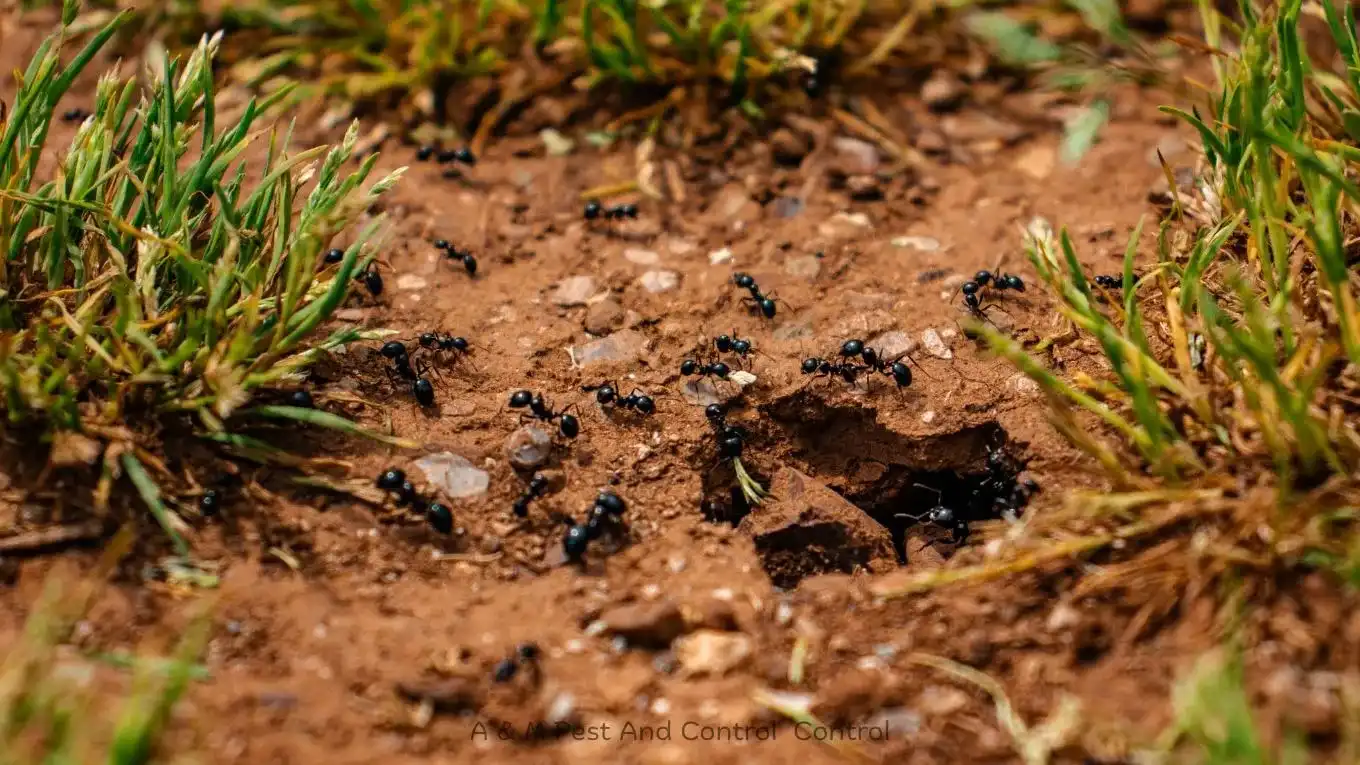
Field ants mound in garden edges and along driveways; pavement ants trail inside along slab cracks. Aphids on fruit trees and vegetables also attract ants that farm them for honeydew.
Garden sheds, flower pots, stacked bricks, irrigation boxes and woodpiles are textbook western black widow habitat. Wear gloves when you reach into seldom-moved items.
Watered soil next to foundations, wood mulch and older homes with wood close to grade give subterranean termites an easy path into framing. Mud tubes on the foundation are the giveaway.
Termite control
About boxelder bugs
Boxelder bugs are a fall nuisance on the mesa wherever female boxelder trees grow. They cluster on sunny south and west walls in September and slip into siding and window frames to overwinter. They don’t bite or breed indoors, but sealing gaps before they gather works far better than spraying them once they’re inside.
Why do Blende homes get so many pests?
Three things about Blende make it busier for pests than a typical Pueblo city block:
Irrigated land
The St. Charles Mesa has been farmed with ditch water for generations. Moist soil and standing water support mosquitoes, termites, voles and the insects spiders feed on.
Fruit, gardens and compost
Orchards and vegetable beds produce food all season. Dropped fruit feeds yellowjackets; vegetables and compost feed mice and voles.
City edge meets open ground
Blende borders Pueblo’s East Side, so rodents and insects move freely between fields, vacant lots and neighborhoods.
Housing varies a lot here, from older single-story homes and farmhouses to newer builds and manufactured homes. Older houses often have gaps around plumbing and vents and wood near the soil line, which is why we look closely at foundations and crawlspaces. The climate helps too: Pueblo County’s long, warm growing season and mild winter days let ants and spiders stay active longer than in most of Colorado.
The mesa sits above the Arkansas River valley, and the river corridor below adds cottonwoods, wetlands and wildlife to the mix. Raccoons, skunks and rabbits that travel along it bring fleas into yards where pets pick them up.
How do you control mice and voles around Blende gardens?
Mice and voles are different problems. Voles live outdoors in shallow runways under grass, mulch and snow, and they damage lawns, bulbs and the bark of young fruit trees. Mice want shelter, so they end up in garages, sheds, wall voids and attics. We treat each one on its own terms.
What a Blende rodent visit includes
Inspect the garage, shed, crawlspace and attic for droppings, nests and gnaw marks
Find vole runways and burrow openings in lawns, garden beds and orchard rows
Set traps and tamper-resistant bait stations away from children, pets and produce
Seal openings around pipes, vents and garage doors with metal mesh and sealant
Recommend tree guards and mulch spacing to protect fruit tree trunks
Habits that keep rodents down on garden properties
Pick up dropped fruit every few days in late summer
Keep compost in a closed bin rather than an open pile
Pull mulch a few inches back from tree trunks and foundations
Store birdseed, grass seed and pet food in sealed metal containers
Mow tall grass along fences where voles shelter
Clear woodpiles away from the house walls
Deer mice are the hantavirus carrier in Colorado, and they favor sheds, garden buildings and cabins that sit closed for months. Before cleaning droppings, air the space out, soak the droppings with disinfectant and wipe them up wet. Never sweep or vacuum them dry. Our rodent control program includes exclusion and clean-up guidance.
Blende pest calendar by season
Garden and orchard schedules drive much of the activity on the mesa. Here is when each problem tends to peak:
Seasonal pest guide for Blende, CO
Season
What Blende homes see
Our focus
Spring (Mar–May)
Ant trails indoors, termite swarmers on warm days, vole damage revealed after snowmelt, wasp queens building nests
Perimeter treatment, termite inspection, vole runway control
Early summer (Jun)
Irrigation season starts, first mosquito hatches, black widows in sheds and pots
Standing-water survey, web removal, larvicide where appropriate
Mid–late summer (Jul–Aug)
Peak mosquitoes and West Nile risk, yellowjackets on fruit and trash, ants in gardens
Barrier treatments, nest removal, fruit sanitation advice
Fall (Sep–Nov)
Boxelder bugs on south walls, mice moving into garages, yellowjackets still aggressive
Sealing gaps, rodent exclusion, bait stations
Winter (Dec–Feb)
Mice in attics and walls, voles under snow cover
Trapping, station checks, tree-trunk guards
If you grow fruit, plan for a late-summer visit: yellowjacket nests are easiest to deal with before the harvest draws everyone outside.
Pest control services available in Blende
Blende homeowners get the full lineup of services we offer in Pueblo, at the same prices and with the same written warranty. Older mesa homes with wood near the soil are good candidates for a termite inspection.
Quarterly Integrated Pest Management plans that stop infestations before they start.
Learn more
Residential, small-farm and preventive service in Blende
Homes
A home visit covers the kitchen, baths, laundry and garage, then moves outside to the foundation, window wells, door thresholds and the first few feet of yard. On properties with gardens, we keep treatments away from edible plants and tell you what we applied and where.
Small farms, orchards and businesses
Hobby farms, produce stands, shops and small businesses on the mesa can set up scheduled service with written visit records. We plan rodent stations and insect treatments around crops, stored produce and animals.
Quarterly prevention
Our quarterly IPM plan fits Blende well, because irrigated land produces new pests each season. Visits renew the exterior barrier, check rodent stations, knock down wasp nests early and look for termite signs.
Water early in the day so soil dries by evening
Keep wood mulch at least a foot from the foundation
Empty saucers, buckets and wheelbarrows after rain
Use lidded trash cans away from doors in fruit season
How our Blende service works
Four steps built for mesa properties that mix a home, a garden and open land.
Call or book online
Tell us what you’re seeing. Blende is close to our office, so we can usually offer a same-day or next-day slot.
Inspection
House, garage, sheds, garden areas and water sources, with findings explained before any treatment.
Treatment
Targeted baits, exclusion and labeled products, kept clear of vegetables, fruit and pets.
Follow-up & warranty
Seasonal visits and free re-treatment if covered pests return during the warranty period.
Licensed, insured and certified
Our applicators hold Colorado Department of Agriculture licenses, every product we use is EPA-registered and applied according to its label, and our integrated approach favors exclusion and sanitation before chemicals.
CDA Licensed Commercial Applicator
Licensed through the Colorado Department of Agriculture's pesticide applicator program.
EPA PESP Partner
Partner in the EPA's Pesticide Environmental Stewardship Program for reduced-risk pest management.
GreenPro® Certified
Follows GreenPro Integrated Pest Management standards: inspect first, treat only what's needed.
Serving Blende and the St. Charles Mesa
We serve homes and businesses throughout Blende. Because it borders Pueblo, it’s part of our everyday service area, and urgent calls such as a wasp nest by the door or mice in the kitchen are usually handled the same or next day.
Before your visit, our pre-treatment checklist explains how to prepare the house, pets and garden areas.
Frequently asked questions
How much does pest control cost in Blende, CO?
A one-time general visit in Blende typically costs $100–$150, and quarterly plans are about $40–$60 per month. Termite work and heavy rodent problems are quoted after a free inspection, and new customers get 10% off their first service.
How fast can you get to Blende?
Blende sits just southeast of Pueblo, close to our office, so same-day or next-day service is usually possible. Our phone line is answered 24/7.
Is it safe to treat near my vegetable garden and fruit trees?
Yes, when it’s done carefully. We keep perimeter treatments off edible plants, use baits and traps for rodents, and follow every product label’s rules about food crops. Tell us where your beds and trees are before we start.
What can I do about voles damaging my lawn and fruit trees?
Trim grass along fences, pull mulch back from trunks and wrap young trees with hardware-cloth guards. We can locate active runways and trap or bait them so the population drops before winter.
Why are yellowjackets so bad in late summer?
Yellowjacket colonies are largest in August and September, when workers switch to sugar and protein from ripe fruit, trash and pet food. Picking up fallen fruit and removing nests near living areas brings the numbers down.
Do mosquitoes on the St. Charles Mesa carry West Nile virus?
Culex tarsalis, the main West Nile vector in Colorado, breeds in irrigation water and is active from June into September. Use repellent at dusk and dawn, drain standing water weekly and ask us about larvicide and barrier treatments.
Are termites a concern in Blende?
Subterranean termites are active in Pueblo County, and watered soil against a foundation helps them. Look for mud tubes on foundation walls or winged swarmers indoors in spring, and schedule a free inspection if you see either.
Do you treat boxelder bugs?
Yes. The best time is late summer, before they gather on warm walls. We seal entry points and treat the exterior surfaces where they cluster, which keeps far fewer from getting inside for the winter.