Open 24/7 — including weekends 50 Radcliff Ln, Pueblo, CO 81005
Licensed & insured in Colorado (719) 283-7071
Ant removal & prevention

Ant Control in Pueblo, CO

Stop ants at the colony, not just the trail. Species-specific baiting and non-repellent treatments from licensed, locally owned Pueblo technicians, with free re-treatment if they return.

  • Licensed & insured
  • Free inspection
  • Family- & pet-conscious products
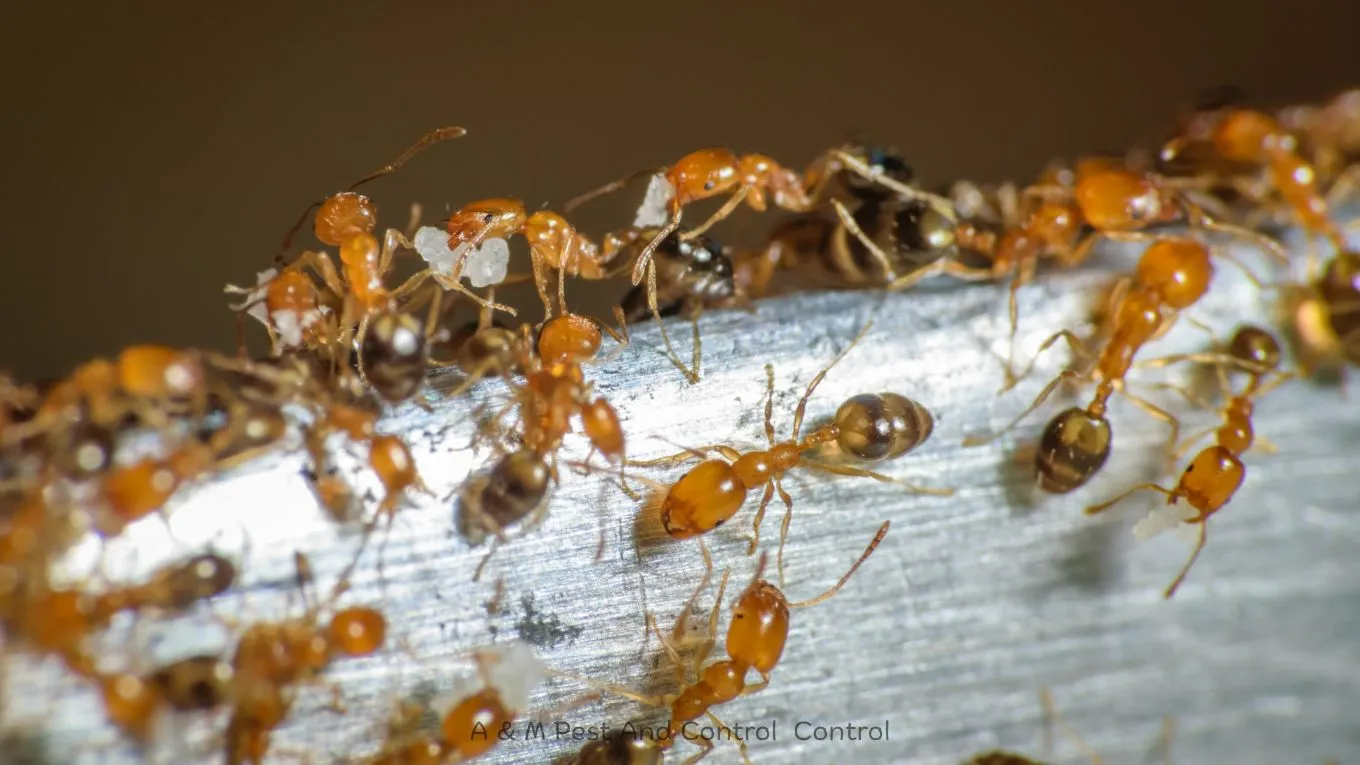
Ants trailing across a surface inside a Pueblo home
$125–$275typical ant treatment in Pueblo
  • CDA licensed
    applicators
  • Locally owned
    in Pueblo
  • 37+ years
    combined experience
  • Open 24/7
    same-day service
  • Written
    service warranty
Reviewed by A & M's licensed applicator team Updated 10 min read Written for Pueblo County, CO

Ant control in Pueblo: what you need to know

Quick answer

Professional ant control in Pueblo, CO typically costs $125–$275 per treatment, confirmed after a free inspection. A licensed technician identifies the species, then uses slow-acting baits and non-repellent products that workers carry back to the queen. Most kitchen ant problems collapse within 1–2 weeks; colony-splitting species such as pharaoh ants can take 4–8 weeks.

Typical treatment
$125–$275
Visible results
3–14 days
Protection
About 60–90 days
Peak season
April–September
Warranty
Free re-treatment

Ants are the most common pest call we get between April and September. Most of the time the problem isn’t the dozen ants on the counter; it’s a colony of thousands nesting under a slab, inside a wall void or in the lawn a few feet from the foundation. Spraying the trail kills the foragers you can see and leaves the queen laying eggs. In some species it actually makes the infestation worse.

Pueblo’s climate shapes which ants you get and when. At roughly 4,700 feet, the city has hot, dry summers and genuinely cold winters, so outdoor colonies go dormant from about November to March. Ants that stay active in January are almost always nesting inside the heated structure: under a warm basement slab, behind a dishwasher or in a wall void. That one detail changes how we treat.

A & M Pest & Termite Control treats ants in homes, apartments and businesses across Pueblo County. We identify the species first, because pavement ants, odorous house ants, pharaoh ants and carpenter ants each need a different product and placement. Then we treat the colony, not just the trail, and back the work with free re-treatment if ants return during the covered period.

Signs you have an ant infestation, not just a few scouts

Steady trails

A line of ants following the same path along a baseboard, countertop edge or window frame. That’s a pheromone trail leading to an established nest.

Sand piles on floors

Small piles of sand or soil next to slab cracks, expansion joints or basement floor drains point to pavement ants nesting under the concrete.

Ants in winter

Ants active indoors between December and February mean the colony is living inside the heated building.

Winged ants indoors

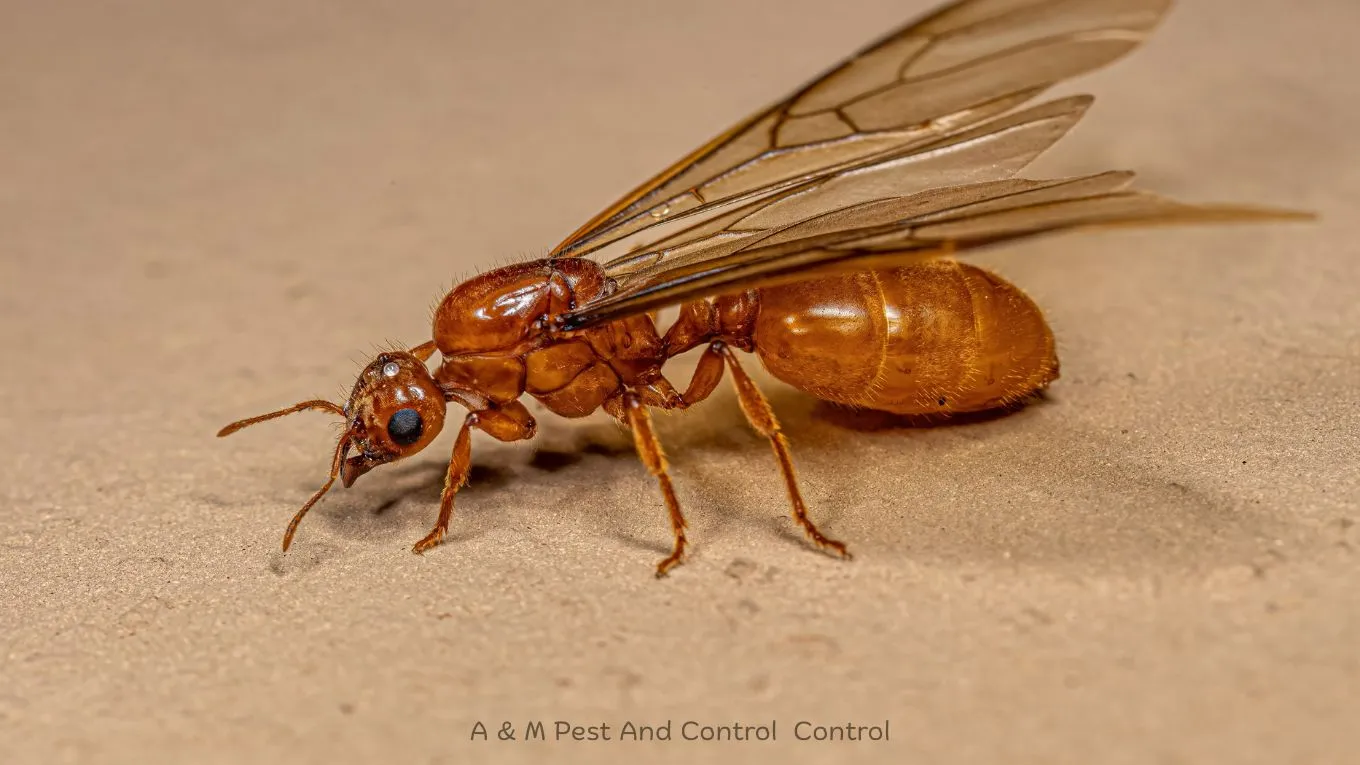
Swarmers inside the house mean a mature colony is nearby, possibly inside the structure. Check whether they’re ants or termites below.

Coarse sawdust (frass)

Piles of wood shavings mixed with insect parts below window frames, decks or log walls are a carpenter ant sign.

They come back after cleaning

If ants return within days of wiping up trails and setting store baits, the colony is intact and probably larger than you think.

Flying ants or termites? How to tell in 10 seconds

Spring swarmers cause a lot of panic. Flying ants are far more common in Pueblo homes than termite swarmers, but the two look similar at a glance. Check three features:

Flying ant vs. termite identification
FeatureFlying antTermite swarmer
WaistPinched, narrow waistThick, straight waist with no pinch
AntennaeElbowed (bent)Straight and bead-like
WingsFront pair noticeably longer than back pairBoth pairs equal length, much longer than the body
What to doUsually an ant colony nearby; an ant treatment resolves itCall for a termite inspection promptly
Pro tip

Save a few swarmers in a sealed sandwich bag or stuck to clear tape. A specimen lets us confirm the species at your inspection and avoids treating for the wrong insect.

Common ant species in Pueblo, CO and how we treat each one

Colorado State University Extension lists dozens of ant species in the state, but a handful cause almost every indoor problem in Pueblo County. Identification matters because each species has different food preferences, nest sites and reactions to treatment.

Pavement ants foraging along a concrete crack

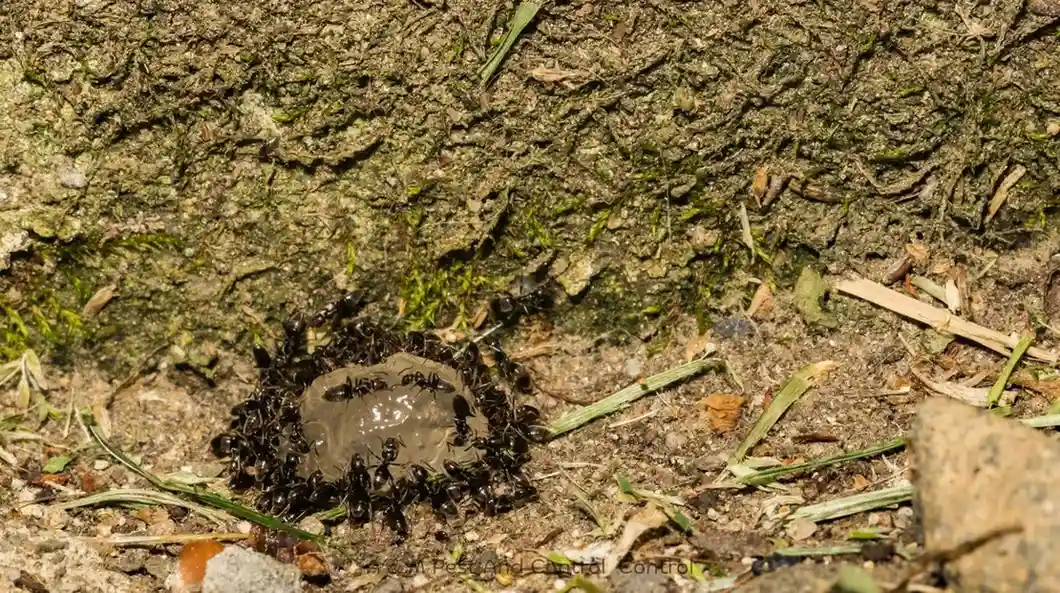
Pavement ants

Tetramorium immigrans

  • Most common in Pueblo
  • Nests under concrete
  • Can be active in winter

Small (about 1/8 inch), dark brown to black ants that nest under sidewalks, driveways, patios and basement slabs. You’ll often see sand piles at slab cracks and, in spring, mass “battles” between neighboring colonies on the sidewalk. Colonies under a heated slab can forage indoors all winter. They eat almost anything: sweets, grease, pet food and dead insects.

How we treat it: Bait placed at the cracks and joints where they emerge, so workers carry it under the slab. A non-repellent perimeter treatment and sealing of active cracks follow.
Odorous house ants on a kitchen surface

Odorous house ants

Tapinoma sessile

  • Very common indoors
  • Rotten-coconut smell when crushed
  • Multiple queens

Small, dark brown to black ants that smell like rotten coconut when crushed. Colonies have many queens and often spread across several linked nests, so a spray that kills part of the colony can scatter the rest into new sites. They love sweets and moisture, so they show up around sinks, dishwashers and water heaters.

How we treat it: Sugar-based baits along active trails plus a non-repellent product outdoors that workers pick up and share. We locate the moisture source and outdoor nest, which is usually under rocks, mulch or landscape edging.
Tiny pale yellow pharaoh ants

Pharaoh ants

Monomorium pharaonis

  • Indoor-only in Colorado
  • Tiny, yellowish
  • Never spray them

Tiny (about 1/16 inch), pale yellow to light brown ants that live entirely indoors in Colorado, because they cannot survive our winters outside. They’re most common in apartment buildings, hospitals, care facilities and restaurants, where they nest in wall voids, behind outlets and in appliances. When stressed by sprays, colonies “bud” into many new colonies, which is why DIY treatment so often makes them worse.

How we treat it: Baiting only. We place multiple bait types across the whole unit and, in multi-unit buildings, adjoining units, and follow up until feeding stops. Expect 4–8 weeks for full elimination.
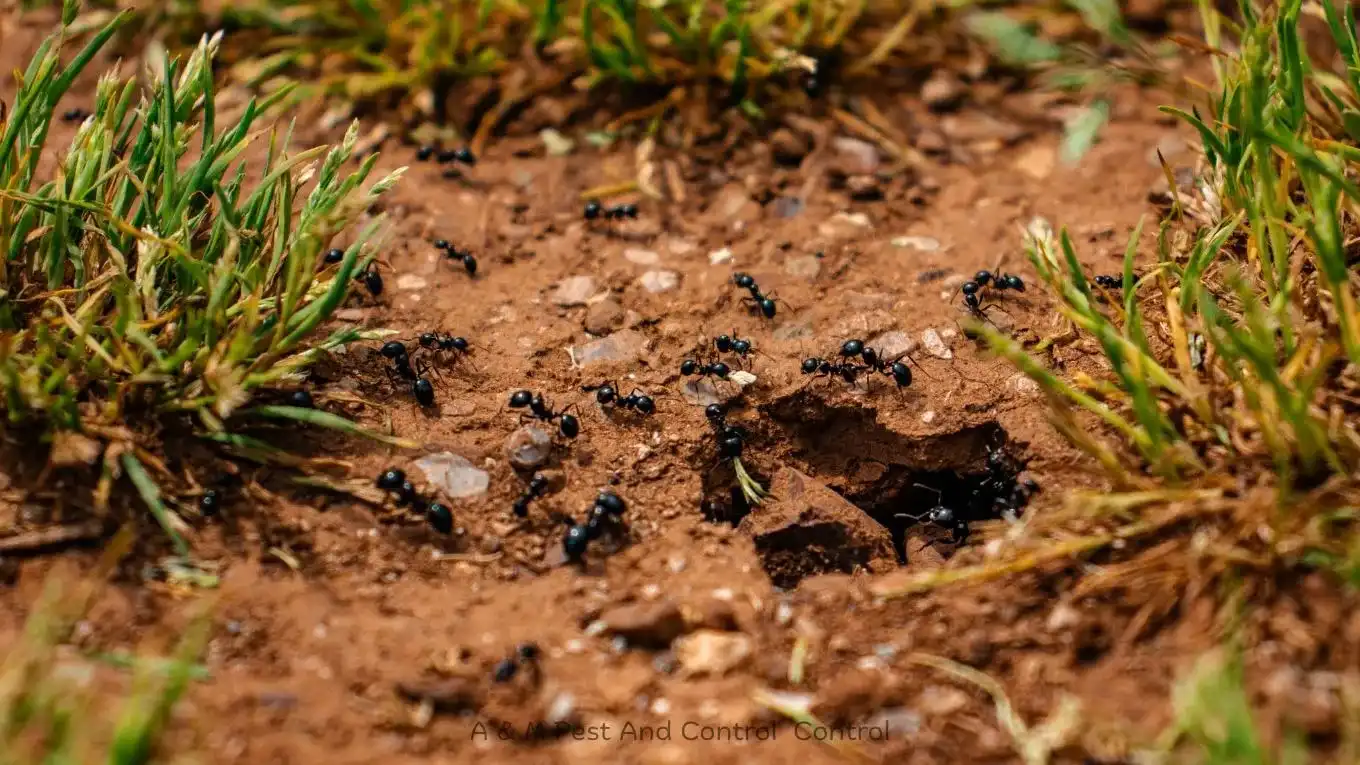
Large field ants on a soil mound

Field ants

Formica spp.

  • Outdoor mound builders
  • Medium to large
  • Can bite

Medium to large ants, red, black or a mix of both, that build soil mounds in lawns, open lots and along foundations. They’re common on acreage in Pueblo West and around irrigated lawns. Field ants rarely nest indoors, but they wander in to forage and are often mistaken for carpenter ants. They can bite and spray formic acid when the mound is disturbed.

How we treat it: Mound treatment with labeled granules or drenches and a perimeter barrier to keep foragers out of the house.
Very small thief ants near food

Thief ants

Solenopsis molesta

  • Among the smallest ants
  • Prefer grease and protein
  • Nest in walls

Tiny, pale yellow ants often confused with pharaoh ants. They get their name from raiding the nests of other ant species to feed on their brood. Indoors they nest in wall voids and cabinets and go after greasy, protein-rich food like meat, cheese, peanut butter and pet food. Many sweet baits don’t attract them.

How we treat it: Protein- or grease-based baits in fine placements near cabinets and wall voids, plus sanitation guidance to remove competing food.

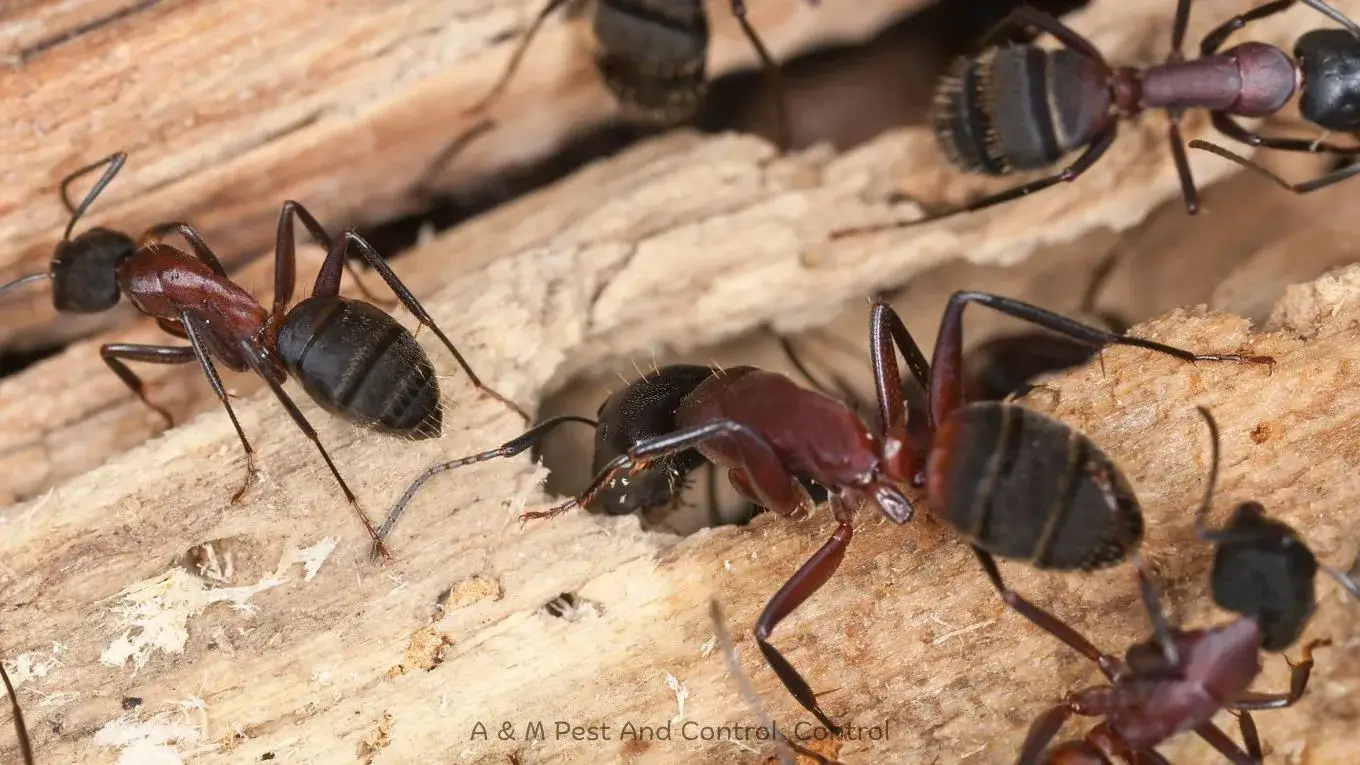
Carpenter ants

Camponotus spp.

  • Largest ants in Colorado
  • Nest in damp or damaged wood
  • Common in foothills

Large (1/4 to 1/2 inch) black or red-and-black ants. Carpenter ants are widespread in Colorado, especially in the foothills and mountains, and we see them most in the Greenhorn Valley, in log and wood-sided cabins near Rye and Colorado City, and in older Pueblo homes with leaking roofs, decks or window frames. They don’t eat wood the way termites do; they excavate galleries in wood that’s already softened by moisture, and push out coarse frass.

How we treat it: Locate the parent and satellite nests, treat wall voids or galleries directly with a non-repellent dust or foam, and fix the moisture problem that made the wood attractive.
Tiny ghost ant with pale abdomen

Ghost ants (rare in Colorado)

Tapinoma melanocephalum

  • Tropical species
  • Heated buildings only
  • Rare in Pueblo

Tiny ants with a dark head and an almost see-through abdomen. Ghost ants are a tropical species. In Colorado they cannot survive outdoors and turn up only occasionally inside heated buildings, usually after arriving in potted plants or shipped goods. They are not “spreading across southern Colorado”; most tiny pale ants we find in Pueblo kitchens turn out to be pharaoh or thief ants.

How we treat it: Indoor gel baits and close follow-up, similar to pharaoh ants. Avoid sprays, which scatter the colony.

Our ant removal process

Every ant job follows the same five steps, adjusted to the species we find.

  1. Inspection & identification

    We follow trails inside and out, check slab cracks, sinks, wall penetrations, the lawn and foundation edges, and identify the species. If we can’t ID it on site, we collect specimens.

  2. Find the nest and entry points

    We map where ants are getting in and where the colony actually lives: under the slab, in a wall, in a mound or in damp wood.

  3. Targeted treatment

    Species-matched baits indoors where they’re feeding, non-repellent products outdoors that workers carry home, and direct nest treatment where we can reach it. We don’t fog living spaces.

  4. Let the bait work

    For the first 7–10 days you’ll often see more ants at bait points. That’s good. Don’t clean or spray them, so the bait gets back to the queen.

  5. Follow-up & prevention

    We return as needed for multi-colony species, seal key entry points and leave you a short list of fixes to keep them from coming back.

How much does ant control cost in Pueblo?

Ant control pricing depends on the species, how many nests are involved, whether the colony is inside the structure, and the size of the property. Here are typical Pueblo ranges:

Ant control pricing in Pueblo, CO
ServiceTypical Pueblo priceNotes
Ant inspectionFree for new customersSpecies ID and treatment plan
Standard ant treatment$125–$275Pavement, odorous house, field and thief ants in a typical home
Pharaoh ant programQuoted after inspectionBaiting-only, multiple visits; multi-unit buildings priced per unit
Carpenter ant treatmentQuoted after inspectionDepends on nest location and wall-void access
Ongoing preventionSee preventive plansQuarterly visits cover ants plus spiders and other common pests

Final pricing is confirmed in writing after your free inspection. New customers get 10% off their first service.

Why ants are a year-round problem in Pueblo homes

A few local conditions explain why we treat so many ant problems across Pueblo County:

  • Concrete everywhere. Slab-on-grade homes, patios and long driveways are ideal pavement ant habitat, especially in neighborhoods like Belmont, Sunset Park and the newer subdivisions in Pueblo West.
  • Irrigation in a dry climate. Pueblo gets only about a foot of precipitation a year. Watered lawns, drip lines and leaky hose bibs are the most reliable moisture around, and ants nest right next to them.
  • Older housing stock. Homes in Bessemer, Mesa Junction and the East Side have more foundation cracks, gaps around plumbing and weathered wood trim for ants to exploit.
  • River corridors. Properties near the Arkansas River, Fountain Creek and Lake Pueblo State Park see heavier outdoor ant pressure in summer.
  • Heated slabs and basements. Our cold winters push some colonies to nest under or inside the warm structure, which is why winter ant calls happen.

When are ants most active in Pueblo?

Ant seasonality in Pueblo County
SeasonWhat ants are doingWhat to watch for
Spring (Mar–May)Colonies wake up; swarmers fly on warm daysFirst kitchen trails; winged ants; pavement ant battles
Summer (Jun–Aug)Peak foraging and colony growthTrails to sinks, pet bowls and trash; field ant mounds
Fall (Sep–Oct)Foraging slows; colonies store foodAnts moving indoors along foundation cracks
Winter (Nov–Feb)Outdoor colonies dormantAny indoor activity means a nest inside the heated building

DIY ant control vs. calling a professional

Some ant problems are DIY-friendly. A few sugar ants on the counter in May can often be handled with store-bought liquid bait stations, patience and better sanitation. Call a professional when:

  • Ants keep coming back after two weeks of baiting
  • You see tiny yellowish ants (likely pharaoh or thief ants)
  • Ants are active in winter
  • You see large black ants or sawdust-like frass near wood
  • Winged insects appear indoors and you’re not sure if they’re ants or termites
  • You manage a rental, restaurant or care facility

Ant prevention checklist for Pueblo homes

  • Wipe counters and sweep crumbs daily; store sweets, honey and pet food in sealed containers
  • Fix dripping faucets, leaky hose bibs and sprinklers that soak the foundation
  • Seal slab cracks, gaps around pipes and door thresholds with caulk or sealant
  • Keep mulch, rock and soil 6–12 inches below siding
  • Trim shrubs and branches so they don’t touch the house
  • Don’t spray ant trails with repellent cleaners while baits are working

If you’re preparing for a visit, our pre-treatment checklist explains what to clear and what to leave alone so baits work the first time.

Is ant treatment safe for kids and pets?

Yes. Modern ant control relies mostly on bait, which is placed in tiny amounts in cracks, behind appliances or in tamper-resistant stations, rather than on broad spraying. Outdoor non-repellent treatments are applied to the foundation and entry points and are dry within a few hours. We’ll tell you exactly where products are placed and how long to keep pets and children off treated areas.

Our safety standard

Every product we use is registered with the U.S. EPA and applied strictly according to its label by Colorado Department of Agriculture licensed applicators.

Ant control for Pueblo businesses and rentals

Restaurants, schools, offices, warehouses, medical offices and apartment communities need ant control that works without disrupting operations. We schedule around your hours, document every visit for health inspections, and coordinate unit-by-unit treatment for pharaoh ants, which move between apartments through shared walls and plumbing. Property managers can roll ant service into a quarterly prevention plan. If you’re seeing roaches alongside ants in a kitchen, our cockroach control service can be combined into the same visits.

Frequently asked questions

How much does ant control cost in Pueblo, CO?

Most ant treatments in Pueblo cost $125–$275, depending on the species, number of nests and property size. Pharaoh and carpenter ant jobs are quoted after a free inspection because they often need extra visits. New customers save 10% on the first service.

How long does it take to get rid of ants?

Most pavement and odorous house ant problems drop off sharply within 3–14 days as the bait reaches the queen. Pharaoh ants, which form many colonies, usually take 4–8 weeks of baiting and follow-up.

Why do I see more ants after treatment?

Baits attract foragers, so activity often increases at bait points for several days. That means workers are carrying bait back to the colony. Avoid spraying or wiping those trails until the activity stops on its own.

Why do I have ants in my house in winter?

Outdoor ant colonies in Pueblo are dormant in winter, so ants active indoors between December and February are nesting inside the heated building, often under a basement slab or in a wall void. These colonies need indoor baiting rather than a perimeter spray.

Are flying ants a sign of termites?

Not necessarily. Flying ants have pinched waists, elbowed antennae and front wings longer than the back wings, while termite swarmers have thick waists, straight antennae and equal-length wings. If you’re unsure, save a specimen and request an inspection.

Do carpenter ants live in Pueblo?

Yes, though they’re more common in Colorado’s foothills and mountains than on the plains. In Pueblo County we find them most often in the Greenhorn Valley and in older homes with moisture-damaged wood, such as leaky window frames, decks and roof edges.

Are ghost ants found in Colorado?

Rarely. Ghost ants are a tropical species that can’t survive Colorado winters outdoors, so they appear only occasionally inside heated buildings. Tiny pale ants in Pueblo kitchens are usually pharaoh or thief ants.

How long does an ant treatment last?

A professional treatment typically keeps ants out for about 60–90 days, and the targeted colony doesn’t come back once it’s eliminated. Homes with constant outdoor pressure stay protected best with quarterly prevention visits.

Are your ant treatments safe for pets?

Yes. We rely mainly on small bait placements and tamper-resistant stations, and outdoor products are dry within a few hours. Your technician will tell you where products are placed and how long to keep pets away.

Termite Control in Pueblo, CO

Termite Control

Inspections, liquid soil barriers, bait systems and NPMA-33 reports for home sales.

Learn more
Cockroach Control in Pueblo, CO

Cockroach Control

Gel baits, growth regulators and follow-ups that break the German cockroach breeding cycle.

Learn more

Ant control near you

See all service areas

Get a free pest inspection today

Licensed Pueblo technicians, upfront pricing and a written warranty. New customers save 10% on their first service.

Call Now Free Quote