Quick answer
Bed bug bites usually appear in rows or tight clusters on skin exposed during sleep (arms, shoulders, neck, face), and you'll find dark spots and shed skins in mattress seams. Flea bites are small, very itchy bumps clustered on the ankles and lower legs, often with pets scratching. In Pueblo, bed bug treatment typically starts at $350–$500 per bedroom with a follow-up in 10–14 days.

Waking up with itchy bites and no visible culprit is one of the most common calls we get in Pueblo. The two usual suspects, bed bugs and fleas, need completely different treatments, so a correct ID saves you time, money and a few more weeks of bites. Here's how to tell them apart using bite patterns, timing and the evidence each pest leaves behind.
Bed bugs vs. fleas: quick comparison
| Sign | Bed bugs | Fleas |
|---|---|---|
| What they look like | Flat, oval, reddish-brown, about ¼ inch (apple-seed size); no wings | Tiny (1/16–1/8 inch), dark, narrow side-to-side; no wings |
| Bite pattern | Rows, zigzags or tight clusters of welts | Scattered small bumps, often with a red halo, in groups |
| Bite location | Skin exposed while sleeping: arms, shoulders, neck, face, back | Feet, ankles and lower legs; waistline if pets sleep in the bed |
| Timing | Mostly at night while you sleep | Any time of day, often right after walking on carpet |
| Movement | Crawl; can't jump or fly | Jump many times their body length |
| Hiding spots | Mattress seams, box springs, headboards, bed frames, nightstands, couch seams, outlets | Carpet, rugs, pet bedding, upholstered furniture, pet fur, shaded yard areas |
| Evidence | Ink-like dark spots, rusty blood smears, shed skins, tiny white eggs, musty odor | “Flea dirt” (black specks that turn red on a wet towel), pets scratching |
| Usual source | Travel, used furniture, visitors, shared walls in apartments | Pets, wildlife under decks or crawlspaces, a previous tenant's pets |
What are the signs of bed bugs?
The common bed bug (Cimex lectularius) is a flat, reddish-brown insect about the size of an apple seed that feeds on human blood, usually at night. Look for:
- Bites in rows or clusters on skin that was uncovered while you slept. Reactions vary widely, and some people don't react at all, so the person with no bites may be sleeping next to the infestation too.
- Dark fecal spots on mattress seams, sheets and the box spring. They look like dots from a felt-tip marker and smear when you wipe them with a damp cloth.
- Rusty or reddish smears on sheets and pillowcases from crushed, fed bugs.
- Shed skins and eggs: pale, empty exoskeletons and tiny (about 1 mm) white eggs in seams, tufts and frame joints.
- A musty, sweetish odor in heavy infestations.
- Live bugs in the mattress piping, behind the headboard or in the gap where the bed frame meets the wall.
Bed bugs don't come in from outside. They hitchhike in luggage, used furniture, backpacks and visitors' belongings, and they spread between apartments through shared walls. That's why we see them as often in single-family homes as in apartments and hotels. Adults can survive for months between meals, so an empty guest room isn't proof they're gone.
The good news: bed bugs are not known to transmit disease. The harm is itching, lost sleep, anxiety and occasionally allergic reactions or skin infections from scratching.
What are the signs of fleas?
In most homes the culprit is the cat flea (Ctenocephalides felis), which lives on both cats and dogs and will readily bite people. Signs:
- Small, very itchy bumps around the ankles and lower legs, often in groups of three or four, sometimes with a red halo.
- Jumping specks on carpet, pet bedding or white socks. Walk across the carpet in white socks and look for tiny dark dots.
- Pets scratching, chewing or losing hair, especially at the base of the tail and the neck.
- Flea dirt: black, pepper-like specks in pet bedding and fur. Put some on a damp white paper towel; if it turns reddish-brown, it's digested blood and you have fleas.
Most of a flea population isn't on your pet. Adult females lay dozens of eggs a day that fall into carpet and bedding, where larvae develop and then spin cocoons. Pupae inside cocoons can wait weeks or months for vibration or warmth before hatching. That's why people often get swarmed after moving into a home where the previous tenant had pets, or after returning from a vacation.
Fleas without pets
Yes, you can have fleas with no dog or cat. In Pueblo, raccoons, skunks, feral cats and rodents denning under decks, sheds or crawlspaces bring fleas right up to the house. In Colorado, fleas on wild rodents such as prairie dogs and rock squirrels can also carry plague. Human cases are rare, but it's one more reason to keep pets on flea prevention and never handle dead rodents with bare hands.
Key differences that settle it
- Location of bites: upper body while sleeping points to bed bugs; ankles and shins points to fleas.
- Timing: bites that appear overnight point to bed bugs; bites after sitting on the couch or walking on carpet during the day point to fleas.
- Movement: bed bugs crawl slowly; fleas jump away instantly.
- Pets: scratching pets and flea dirt point strongly to fleas. Bed bugs rarely live on pets.
- Where evidence collects: mattress seams and bed frames for bed bugs; carpet, rugs and pet bedding for fleas.
Catch one on clear packing tape and keep it. A flat, oval, slow-crawling bug is a bed bug; a tiny, narrow bug that jumps is a flea. Bringing the sample to your inspection helps us confirm the species. Bat bugs and swallow bugs look almost identical to bed bugs and come from bats or bird nests on the house, which changes the treatment.
What to do if you suspect bed bugs or fleas
If you think it's bed bugs
Don't move to another room
Sleeping on the couch or in a guest room spreads bed bugs to new furniture. Stay put until the inspection.
Heat-dry your bedding
Wash sheets, pillowcases and blankets, then dry on high heat for at least 30 minutes. Bag clean items.
Skip the foggers
Bug bombs don't reach seams and cracks and tend to scatter bed bugs into walls and neighboring rooms.
Get a professional inspection
Bed bugs are very hard to eliminate on your own. Treatment combines targeted insecticides, insect growth regulators, steam on fabrics and dust in voids, with a follow-up in 10–14 days.
Our bed bug treatment in Pueblo typically starts at $350–$500 for one bedroom, confirmed after inspection.
If you think it's fleas
Treat every pet
Get dogs and cats on a vet-recommended flea product the same week the home is treated.
Vacuum daily
Carpets, rugs, furniture and pet resting spots. Empty the vacuum outside each time.
Wash pet bedding
Hot water and a hot dryer, weekly until the problem is gone.
Treat the home and yard together
A professional treatment with an insect growth regulator breaks the life cycle. Expect some new fleas for 2–3 weeks as protected pupae hatch.
Our flea and tick control coordinates indoor and yard treatments with your pet's protection. Before either service, run through our pre-treatment checklist so the first visit counts.
Why Pueblo homeowners should act quickly
Both pests multiply fast. Bed bugs survive for months without feeding and spread room to room, and fleas lay eggs daily into your carpet. Pueblo's warm summers boost outdoor flea activity, and heated homes let both pests breed through the winter. The longer you wait, the more rooms are involved and the more a treatment costs.
We inspect and treat homes, apartments and rentals across Pueblo, Pueblo West, Fountain and Colorado City, with discreet service on request and same-day or next-day appointments when available. Call (719) 283-7071, open 24/7.

Written by the team at A & M Pest & Termite Control, a locally owned Pueblo company of licensed Colorado Department of Agriculture commercial applicators with 37+ years of combined experience. Our technicians inspect for bed bugs and fleas in Pueblo homes, apartments and rentals every week. Reviewed by A & M's licensed applicator team.
Related guides
Pest Control Pre-Treatment Checklist: 15 Steps Before Service
Exactly how to prep your kitchen, bedrooms, pets and kids so the treatment works the first time.
Read the guide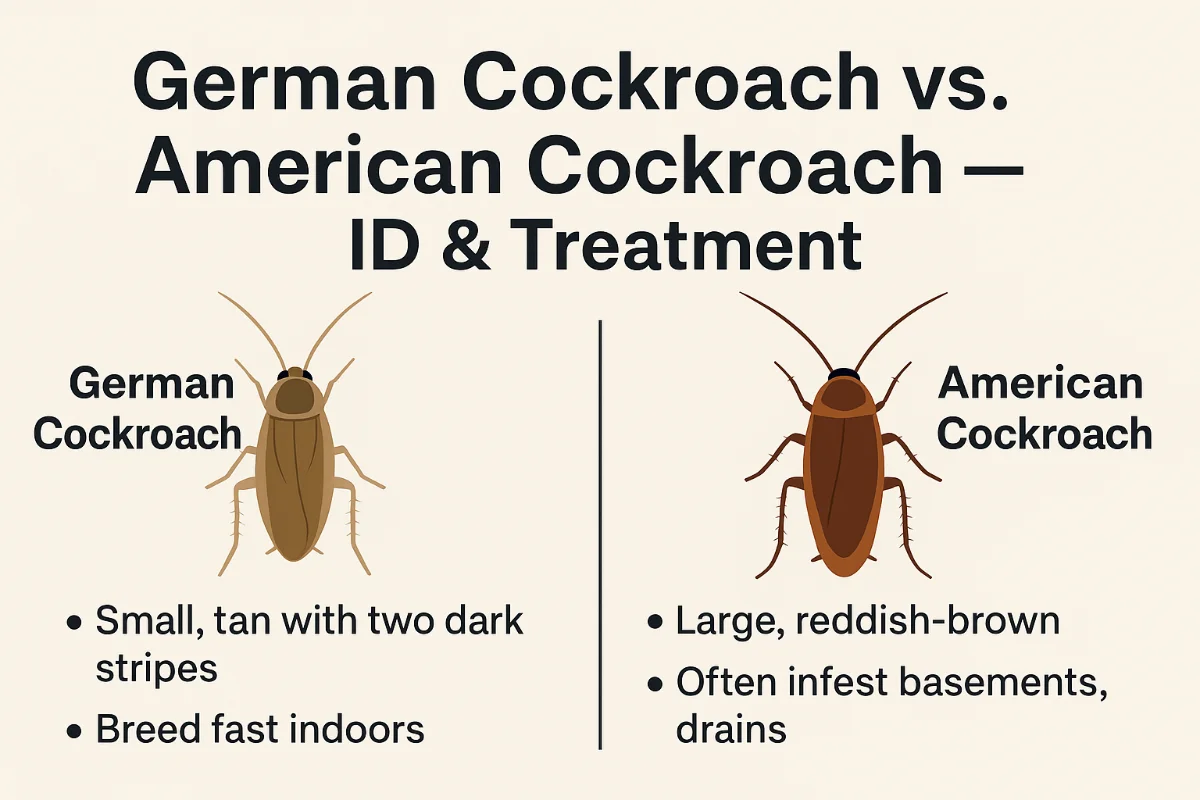
German vs. American Cockroach: ID & Treatment Timeline
How to tell the two apart in 10 seconds, and why it changes how long treatment takes.
Read the guide